What Is the AG Score and Why Should You Trust It?
When it comes to selecting pine seedlings, one question matters more than anything else: How will this tree perform on my land?
At ArborGen, we developed the AG Score to help answer that question clearly and confidently. It simplifies complex genetic data into a single, easy-to-understand number, giving landowners and foresters a better way to compare families and make informed planting decisions.
But a common follow-up question we hear is: Where does that score actually come from?
Let’s break it down.
The AG Score: A Simple Number Backed by Complex Science
The AG Score is a weighted index that combines four critical traits:
- Productivity
- Rust resistance
- Stem straightness
- Forking
Each of these traits plays a direct role in determining timber value and overall stand performance. By combining them into one score, we make it easier to evaluate genetic quality without having to interpret multiple datasets.
A higher AG Score means a stronger overall combination of traits – and ultimately, a higher potential return on your investment.
Where the Data Comes From: Decades in the Field
The strength of the AG Score isn’t just in how it’s calculated – it’s in where the data comes from.
AG Scores are built from:
- Long-Term Progeny Trials
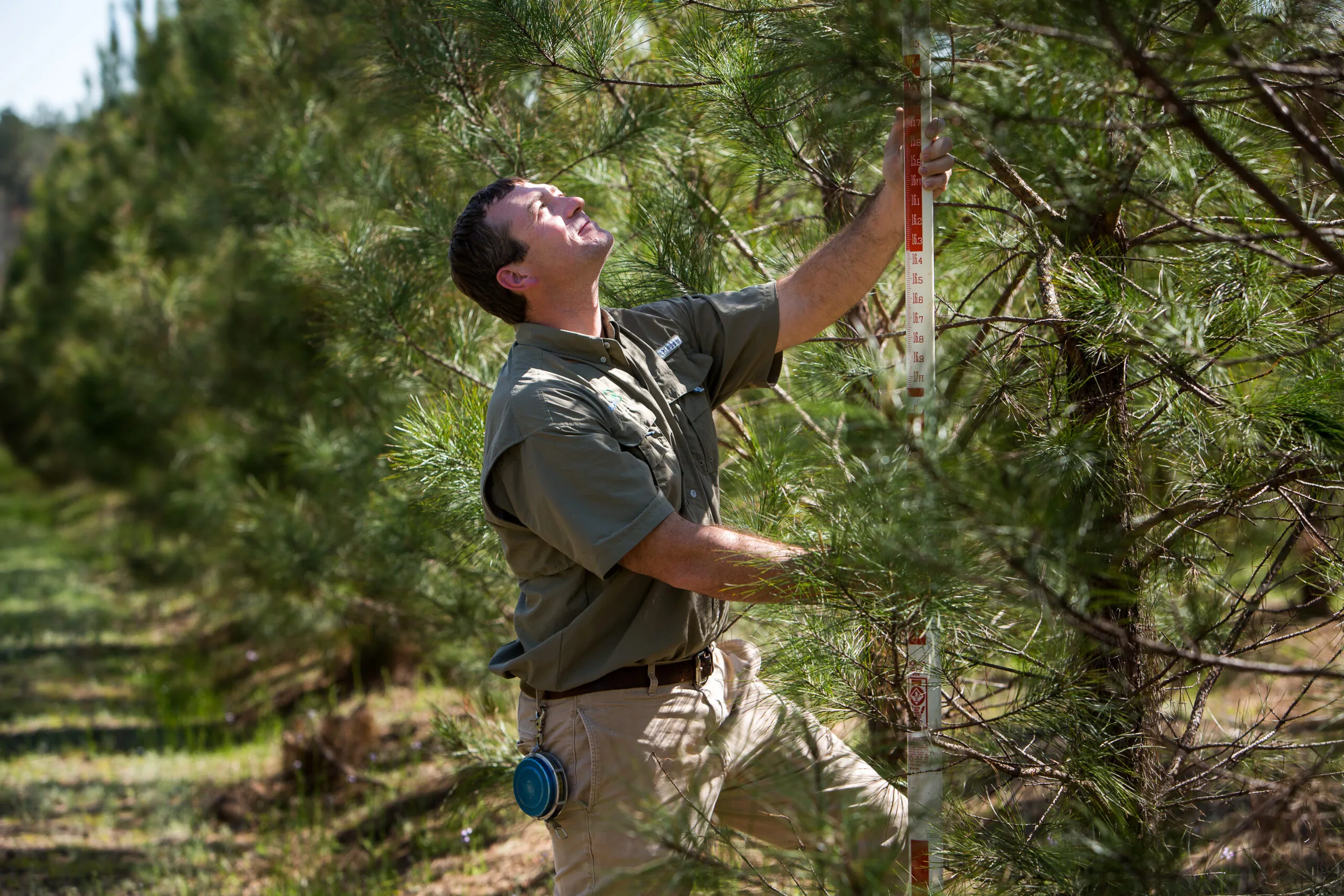
ArborGen evaluates families through progeny trials, where seedlings are planted across multiple sites and monitored over time.
These trials measure real-world performance, typically using age 6 data, which provides a reliable early indicator of long-term growth and form.
- Diverse Geographic Testing
Trees aren’t grown in a lab, they’re grown in the field.
That’s why ArborGen tests genetics across a wide range of environments to ensure performance data reflects real planting conditions, including:
- Soil variability
- Climate differences
- Regional disease pressure
This allows us to understand how a family performs, not just in one location, but across the landscapes where our customers operate.
- Benchmarking Against Proven Standards
All AG Scores are measured relative to a known benchmark: the improved Coastal checklot (CCK).
This ensures consistency and allows for apples-to-apples comparisons across families, so when you see a gain in productivity or improvement in rust resistance, you know exactly what it means.
Why This Matters for Your Bottom Line
The AG Score isn’t just a number – it’s a decision-making tool designed to help you:
- Select genetics with higher yield potential
- Reduce risk from disease like fusiform rust
- Improve stem quality for better sawtimber value
- Make confident, data-driven planting decisions
In short, it helps turn decades of research into practical, actionable insight.
Turning Data Into Better Decisions
Forestry is a long-term investment. The choices you make today will impact your land for decades to come.
That’s why we believe you deserve more than just a product – you deserve transparent, research-backed data you can trust.
The AG Score is our way of delivering exactly that.
Want to Explore AG Scores Further?
If you’re comparing seedlings or planning your next planting, understanding the AG Score is a great place to start. Visit our AG Score page to learn more about how it works and how to apply it to your operation.